Author: Steve Sabean

  • Union Gas February Checkpoint

    Dawn Storage, owned by Union Gas and now an Enbridge Company, is Canada’s largest underground storage facility for natural gas. Dawn storage facilitates balancing requirements at the account checkpoint dates in February and September. Status reports are now available and balancing transactions must be nominated by February 23rd.

    It’s important to remember that balancing transactions are interruptible. In addition to February and September checkpoints, customers with their own direct purchase account must also balance to within 4% at contract renewal.

    Although Union Gas and Enbridge are essentially now the same company, balancing requirements still differ. Enbridge has just two balancing timelines. The gas account must be within 20 days of the MDV at account renewal and balanced to zero 180 days from the gas account renewal date.

  • Ontario Offers Green Bond to Raise $1 Billion

    For the fourth time in three years, Ontario is offering a green bond to raise money for environmentally friendly projects across the province. Ontario is the first Canadian province to issue green bonds.

    The bond will raise $1 billion, the largest green bond offering by any Canadian province. Previous offerings were over-subscribed.

    As with its earlier green bond issues, Ontario has earmarked a number of eligible projects to receive the proceeds. Those projects include clean energy transportation, energy efficiency and conservation. A total of 13 projects have received or will receive funding from Ontario’s previous three green bond issues, with the majority of the funding allocated towards clean transportation projects.

    For a more in-depth analysis, click here.

  • The Extreme Energy Consumption of Bitcoin Mining

    Cryptocurrencies are decentralized digital currencies that use encryption techniques as security while operating independently of central banks. Of these virtual mediums of exchange, bitcoin continues to be the most popular.

    Cryptocurrency mining is the process of verifying and adding bitcoin and other cryptocurrency transactions to a public ledger known as the blockchain (the underlying technology). It is also the method by which new bitcoins are released.

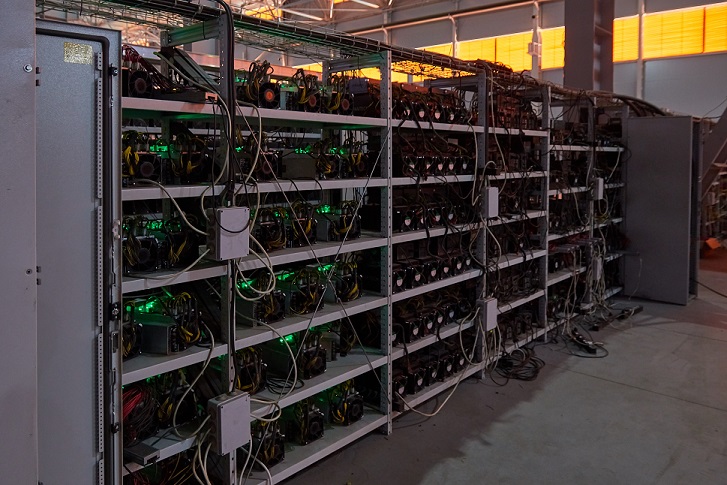
    The mining process involves computers solving difficult cryptographic problems, and the transaction fees associated with bitcoin mining are awarded to the miners. The practice itself uses a large amount of energy and produces a significant amount of heat. Therefore countries with stable governments, cheap electricity and cold temperatures are ideal for cryptocurrency mining operations.

    Bitcoins have been around for almost 10 years. In the early days, the mining was done with regular desktop computers, but as it became more competitive it required powerful, specialized computer equipment. Although these mining “rigs” are expensive, the biggest cost is the power itself.

    Aside from bitcoin, there are now over 1,500 cryptocurrencies and tokens using blockchain technology (any digital cryptocurrency similar to bitcoin is referred to as an altcoin).

    According to co-authors, Don and Alex Tapscott, authors of Blockchain Revolution (2016), “Currency isn’t the only purpose of blockchain technology. The blockchain technology is an incorruptible digital ledger of economic transactions that can be programmed to record not just financial transactions but virtually everything of value.”

    Blockchains record and verify transactions. They are transparent and incorruptible. Blockchain technology is poised to affect every industry involving large amounts of digital information needing authentication. Examples are contracts, governance, supply chain auditing, protection of intellectual property, and even in energy distribution by enabling the buying and selling of energy (for example, redistribution of solar energy in neighbourhood microgrids).

    As cryptocurrencies and blockchain mining become more prevalent, mining operations are increasingly using more and more energy. These ventures can be set up anywhere in the world, but because the single biggest variable is the cost of electricity, miners look to countries or jurisdictions with the lowest energy costs.


    Today, massive server farms exist in China (over 50%), Iceland, Sweden and the US. While these countries provide low cost hydroelectricity, in the cases of China and the US in particular, high-polluting coal is also being used.

    Recently China, South Korea and others have decided to clamp down on bitcoin mining. But cryptocurrency and blockchain technology is not going away and therefore miners are looking to set up shop elsewhere.

    Is Canada the Next Cryptocurrency Mining Hotspot?

    This means Canada stands to benefit. For example, Manitoba Hydro and Hydro Quebec generate a huge amount of cheap hydropower. In fact, Quebec has already branded itself as a source of “green bitcoin.”

    David Vincent, director of business development at Hydro-Québec, claims that the province has three of four of the world’s largest blockchain players. Some projects in the works are up to 300 megawatts.

    Meanwhile, Drumheller, Alberta, is the new home to Hut 8 Mining Corp. who claim their price for electricity is three cents per kilowatt hour.

    So far, Canada has allowed cyberminers to operate with little interference, although the government has a long way to go in terms of fully accepting cryptocurrency development.

    Interestingly, the number two cryptocurrency based on market capitalization is Ethereum, which was created by 20 year-old Canadian immigrant, Vitalik Buterin, who has a supposed IQ of 257. The Canadian government has launched a trial to explore the use of Ethereum blockchain technology in making government research more transparent.

    What about Ontario as a potential destination for cryptocurrency miners? After all, the province has excess electricity and would seem to be a natural fit.

    However, Ontario also has some of the highest electricity prices in North America. A recent report published in 2017 by Hydro Quebec that compares the average electricity prices for large power consumers in major North American Cities shows Toronto and Ottawa as the most expensive:


    City Province Avg Price in cents per kWh
    Toronto ON 14.55
    Ottawa ON 12.46
    Halifax NS 10.14
    Charlottetown PE 9.31
    Regina SK 8.67
    Moncton NB 7.86
    Edmonton AB 7.68
    Vancouver BC 7.54
    St John’s NL 6.95
    Calgary AB 6.09
    Montreal QC 5.18
    Winnipeg MB 5.01


    Cryptocurrencies have a long way to go before they are accepted into the mainstream. In fact, there was a large decline in their value in recent weeks mainly due to negative publicity that included major credit cards banning them and increased scrutiny from regulators.

    Nevertheless, with its abundance of cheap, eco-friendly energy resources, Canada could become a world leader in these and other evolving technologies.

  • TransCanada Changes Pipeline Rules For Producers

    TransCanada Changes Pipeline Rules For Producers

    TransCanada Corp. has changed the way natural gas shippers contract for capacity, thus limiting storage access for many producers. Whereas previously TransCanada would scale back service for firm-service shippers to make way for spot shippers, under new guidelines, gas producers with firm-service contracts now have priority over intermittent shippers whose services are being cut.

    In addition, TransCanada has been performing pipeline maintenance while continuing work on a very large expansion project on its Nova Gas Transmission (NGTL) system. In NGTL’s most recent update to their daily operating plan, they added new outage events between July and October of 2018, with maintenance possibly continuing into next year.

    This has led to massive commodity and transportation price swings. Traditionally, Alberta’s AECO hub prices have moved with other price hubs around North America, including NYMEX and Dawn, but these price relationships have moved further apart in recent months with no sign of getting back to normal.

    To read more, click here.

  • Ontario Incentivizes Electric Vehicle Charging Stations

    Ontario Incentivizes Electric Vehicle Charging Stations

    On January 16, the Ontario government announced an 80% discount (up to $7,500 each) to employers and commercial building owners who install electric vehicle charging stations.

    Five million dollars of this program will come from the cap-and-trade revenues as part of Ontario’s Climate Change Action Plan. There are currently about 1,300 public charging stations and 16,000 electric vehicles in Ontario.

    For more information, click here.

  • Ontario Utilities to Implement Green Button Data Standard by July 2020

    The Green Button is an initiative that provides all consumers with easy access to their energy- and water-related usage information.

    The program began in the United States in 2011, as means to promote access to energy usage data by utility customers within a standardized format. It has since been adopted throughout North America. Leading the way in Canada, the Ontario Ministry of Energy is proposing that all of the province’s utilities provide usage data by July 1, 2020.

    An article by Borden Ladner Gervais lists the following Green Button benefits:

    • Increase conservation and efficiency by promoting behavioural changes;
    • Increase energy reporting and benchmarking by requiring large building owners and the broader public sector to report annually on the energy consumption of their buildings. As the energy data would be in a common format, third-party applications could support the aggregation of data for multiple energy accounts, facilitating building-level reporting for multi-metered properties;
    • Increase process efficiencies for consumers and third-party service providers to access energy data from electricity and natural gas utilities;
    • Reduce utility customer care effort and increase conservation program efficiencies and innovations for electricity and natural gas utilities (g.easier access to data to conduct audits and evaluate programs; innovations to existing programs based on increased consumer access to data); and
    • Create economic development opportunities by fostering the development of innovative and interactive energy management software tools and apps that make consumption data available to customers in more engaging ways (e.g. gamification of energy data to drive greater customer awareness).

    For a more in-depth article on these proposed regulations, go here.

  • How Cold Weather Extremes Affect Ontario Energy Markets

    How Cold Weather Extremes Affect Ontario Energy Markets

    Thanks to a bone-chilling Arctic air mass, winter arrived this year with a dramatic temperature drop throughout much of North America. With unusually warm air settling over the North Pole, the decreased temperature gap between north and south caused the Jet Stream to dip, bringing frigid air southwards. As in 2014, the term “polar vortex” re-entered popular discourse.

    According to the National Oceanic and Atmospheric Administration, this huge accumulation of frosty air resulted in more than 1,600 daily records for cold being tied or broken in the last week of December. But the weeks-long deep freeze was by no means uniform: while much of the East Coast battled a brutal winter storm, West Coast temperatures were higher than normal.

    As climate scientists assess these unpredictable weather patterns, this season’s polar vortex and “bomb cyclone” have affected natural gas markets throughout North America. For starters, the intense cold sent regional U.S. natural gas spot prices higher as demand reached record seasonal highs.

    Ontario Prices Spike

    In Ontario, natural gas prices had been in a low and stable holding pattern in recent years, with the last price spike occurring during the winter of 2014. Since that spike, the price dropped quickly, remaining relatively stable for the past four years. The December cold blast created price spikes.

    Ontario prices have been affected even more so because the province relies on gas delivered via pipeline from other parts of North America and from natural gas storage facilities such as Ontario’s Dawn Hub, which became strained as gas could not be withdrawn fast enough to meet demand.

    What is Curtailment?

    A reduction of gas deliveries, or curtailment, may occur due to a shortage of supply or because demand exceeds pipeline capacity.

    There are two reasons utilities will call a curtailment event. One is storage management. Utilities manage stored gas in a manner that ensures there is enough supply to meet the heating demand for the entire winter. Most large industrial consumers have special interruptible delivery contracts, allowing utilities to curtail supply to their facilities. These large consumers usually have alternate supply options such as oil or propane, which are much more expensive than natural gas and can cause operational issues if they have not been used recently. To incentivise large natural gas consumers to agree to an interruptible contract and occasionally switch to a more expensive alternative fuel, these industrial users pay a discounted delivery rate for their natural gas.

    Having different delivery cost tiers also ensures that residential consumers will always have enough natural gas to heat their homes—even in the coldest days.

    The other reason for a curtailment is distribution capability. Distribution pipes are sized to meet expected demand throughout the year. But pipelines are not always large enough to move enough gas to where it is needed (e.g. pipes going to Leamington are not large enough to meet the expanding greenhouse industry).

    Larger users will typically sign a gas delivery contract—with maximum hourly, daily and annual usage amounts—to allow the utility to manage the flow along the feeder pipes. If there is more demand in a certain area, the utility will expand the pipeline to meet the expected demand. If, however, the pipeline is limited, there will be commercial consumers along the pipeline that will be asked to shut down or curtail their gas usage.

    Curtailment Delivery Supply (CDS)  

    Natural gas consumers on the Enbridge system with interruptible contracts have been asked to turn off their gas and use alternative fuels (curtailment was called January 3–7). On the first day, consumers were allowed to source incremental gas using Enbridge’s Curtailment Delivery Supply (CDS) but this was not available Jan 4–7. Although Enbridge’s CDS is a valuable service, there is limited pipeline capacity into Toronto and CDS gas has been increasingly difficult to obtain.

    Union Gas also recently sent out a notice of limited activity at their Dawn storage facility, stating: “Due to sustained extreme cold weather and high requests for interruptible activity, interruptible storage requests may not be scheduled on the Dawn Storage to Dawn (Withdrawal) path.”

    Extremely cold weather also affects a consumer’s balancing position in terms of forecasted usage versus contracted daily quantity. On the Union Gas system, the winter checkpoint is approaching and consumers will most likely be required to buy more gas at balancing time in February. The additional gas usage this winter will also affect year-end gas balancing requirements.

    Ontario’s Industrial Conservation Initiative (ICI)

    The Ontario ICI program gives larger electricity consumers the option to switch to a different distribution rate called Class A. Although the ICI program began five years ago, many commercial consumers switched to Class A because the minimum demand threshold was reduced in 2017 to allow more customers to participate. The benefit is that consumers pay a lower global adjustment (GA) rate, a charge that has sometimes been over half of the overall electricity bill. To take maximum advantage of the lower GA charge, electricity users must reduce their usage during the five hourly Ontario peaks throughout the year.

    Whereas peak usage in Ontario typically occurs in the summer, electricity demand is peaking this winter. For Class A participants that are actively trying to reduce their electricity usage during the five Ontario peaks, management of usage must occur more often than just on hot summer days. Predicting the Ontario demand peaks is challenging and is becoming even more so with extreme temperature occurrences.

    Class A electricity consumers (ICI) will be affected if more electricity is being used during these winter peaks. Thus far for this ICI period, Ontario peaks have occurred in June, July and September, with a high likelihood that January will see at least one peak demand hour. The only other time a winter Ontario peak was recorded was 2015.

  • Ontario’s First Year of Cap and Trade

    Ontario’s First Year of Cap and Trade

    On January 1st of this year, Ontario’s Cap and Trade program came into effect. Cap and Trade is a government-mandated, market-based mechanism to help mitigate climate change by setting a hard cap on greenhouse gas emissions while allowing businesses flexibility in terms of how they meet their caps. Those companies that reduce greenhouse gas emissions are rewarded through economic incentives.

     

    In Ontario, gas utilities are required to administer the program by purchasing emission allowances and billing for the natural gas each business and home consumes. What this means is that for everyone who uses natural gas in the province, there’s a new line item on their bill. For instance, for Union Gas and Enbridge users, a surcharge appears. Electricity bills in Ontario are not affected by cap-and-trade because it is covered in gas bills.

    The price of emission allowances is calculated per cubic metre of natural gas used and varies with supply and demand, as reflected in every user’s gas bill.

    An Emissions Trading Auction

    Under cap and trade, the government issues a limited number of permits (or allowances) specifying the amount of carbon a company can burn while setting an overall carbon emissions cap. If a company wants to burn more than its allowance permits, it must buy extra permits from other companies in Ontario’s cap-and-trade quarterly auctions. There have been three such auctions this year: March, June and September—with a fourth slated for November 29th.

    In regulated industries, companies are assigned a pro-rata cap based on their share of historical emissions and are required to have allowances for all of their emissions. They purchase allowances in the auction and can then buy and sell these amongst themselves. Clean companies can benefit from selling off their credits; more emissions-heavy companies can purchase additional credits to cover their emissions. The system is geared to reduce overall emissions by reducing the cap gradually each year, while incentivizing companies to invest in cleaner processes.

    Companies that emit less than 25,000 tonnes of carbon dioxide equivalent a year will be automatically charged by their local natural gas utility.

    Mandatory Participants

    The following are required, by law, to participate in the Cap and Trade program:

    • Electricity importers
    • Natural gas distributors
    • Facilities emitting 25,000+ tonnes of greenhouse gas per year (equivalent to 13 million m3/year).
    • Fuel suppliers selling more than 200 litres of fuel per year

    Mandatory participants must purchase an emission allowance for every tonne  of CO2 they produce. Companies that need additional allowances to match their emissions can buy them from the cap-and-trade auctions, through a secondary market broker or via other companies who have a surplus.

    The first period of compliance is from 2017 to 2020. At the end of each period, mandatory participants must have enough allowances to equal their emissions.

    Voluntary Participants

    Businesses generating between 10,000 and 25,000 tonnes (5 million to 13 million m3/year) of greenhouse gas emissions per year do not have to participate in the cap-and-trade program but can choose to opt into the program as a voluntary participant. Voluntary participants may register for the upcoming year if they meet the criteria set out in the cap-and-trade regulation. To be a part of this program you must complete a series of steps and meet key deadlines each year.

    Voluntary participants are subject to the same rules as mandatory participants. Depending upon the industry, companies that lower emissions below sector-specific historical benchmarks may be able to obtain allowances that they can then sell to other companies.

    Free Allowances Available

    Most large emitters will receive most of their required emission allowances for free during the initial compliance period of 2017–2020. Beginning in 2018, that number will decline at a rate of 4.57% per year for combustion emissions. To remain compliant, companies will need to either reduce their emissions or purchase allowances or credits.

    Both mandatory and voluntary cap and trade participants can apply for free emission allowances provided they are:

    • An electricity generator
    • Involved in electricity importation and transmission
    • Producing or supplying petroleum
    • Distributing natural gas

    Companies must apply for free emission allowances by September 1st of each year.

    Cap and Trade and Energy Costs

    The cost of emission allowances is now built into the cost of natural gas,  electricity and other fuels.

    Almost all carbon emissions from electricity generation in Ontario are related to natural gas-fired generation. Thus there is no separate cap-and-trade charge on electricity bills.

    Meanwhile, natural gas generators are paying for the cost of their carbon emissions through the upstream purchasing of credits by distributors who then pass on the additional cost of these credits as a charge for the natural gas consumed. This translates into an increased cost to produce electricity and higher electricity prices.

    In theory, cap and trade will continue to put upward pressure on the Hourly Ontario Electricity Price (HOEP) because as the availability of credits decreases, the price of emission allowances will increase. However in actual fact, we’ve seen the cost of HOEP decrease since the beginning of the year.

    What Happens to the Proceeds of Cap and Trade?

    Proceeds from Cap and Trade are estimated to be around $1.5 billion per year. The province will reinvest into the province’s Greenhouse Gas Reduction Account (GGRA), which will be used to fund eco-friendly projects to further reduce GHG emissions, such as the Ontario Climate Change Action Plan.

    Among other plans to reduce emissions, the government intends to create incentives for the purchase of electric vehicles, increase the availability and use of lower carbon fuel, improve public transportation, and provide incentives for apartment building energy retrofits.

    The Green Ontario Fund will apportion some of the proceeds into creating incentives to purchase electric vehicles, retrofitting of homes and supporting clean energy technologies.

    Beyond Ontario

    As part of the Western Climate Initiative, Ontario joined with other jurisdictions to create a cohesive cap and trade program. Since 2014, two other jurisdictions in North America have been active in cap and trade: California and Quebec. Oregon is now considering similar legislation.

    Ontario’s program was designed to be aligned with these markets and joint auctions with California and Quebec are staring in 2018. Total revenue from these will be divided amongst the three jurisdictions.

    Starting in 2018, the Canadian federal government will impose a national price on carbon to meet its obligations under the Paris Agreement.

    For more information about Ontario’s cap and trade program, contact GOenergy today.
  • EIA Storage Data Showed A 64 Bcf Injection

    The U.S. Energy Information Administration reported a 64 Bcf injection for the week ending October 20. Estimates had been 52 to 68 Bcf with consensus at 66 Bcf. Last year was 74 Bcf and the 5-year average was 75 Bcf. Net storage injections to date are 16% lower than the 5-year average. Last day of trading for the November natgas contract was Friday.

  • Ontario Natural Gas Consumers the Winners in Pipeline Battle

    Ontario Natural Gas Consumers the Winners in Pipeline Battle


    Big changes are happening in the way Ontario consumers purchase natural gas. Due to increased competition and lower pipeline tolls, natural gas producers from Alberta and the US are competing to provide bargain prices to the Ontario market.

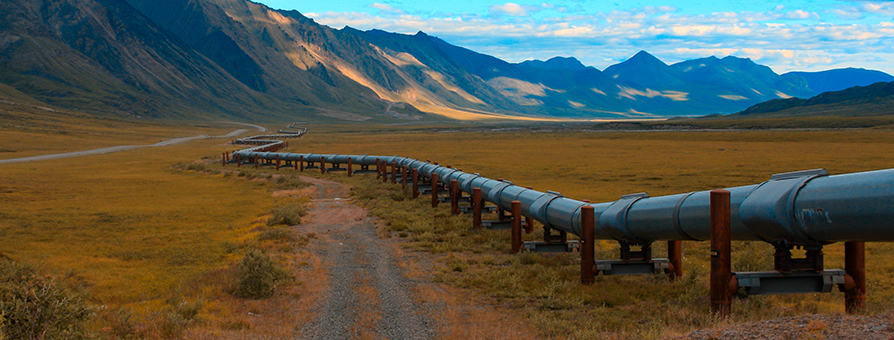
    Natural gas production in Alberta has traditionally been transported by way of the TransCanada PipeLines Limited (TCPL). But with shipping options increasing, all Ontario and Quebec utilities are moving towards sourcing natural gas at points in Ontario.

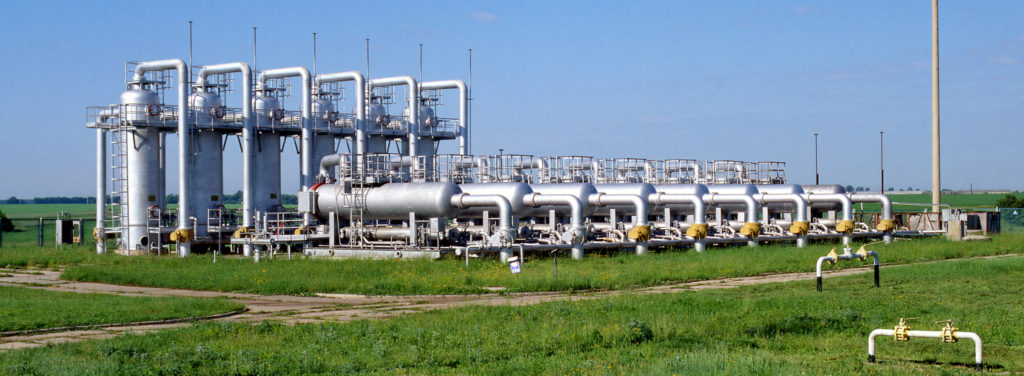
    An example of a new competing pipeline is the Rover Pipeline, which is slated to deliver one billion cubic feet per day from Pennsylvania’s Marcellus and Utica shale production areas into the union gas dawn storage hub in Ontario. The Dawn Hub is Canada’s largest integrated underground natural gas storage facility.

    Meanwhile, according to TCPL, the Vaughan Mainline Expansion (VME) is under construction and due to come online in November. This project is to serve as an additional connection between the two Ontario utilities, Union Gas in the southwest, and Enbridge in the Toronto area. It will allow Enbridge consumers the ability to source gas at the Dawn Hub.

    Many things had to happen to meet the November 1st start date. In order for Enbridge to implement Phase 2 of the Dawn Transportation Services (DTS) for eligible customers in its distribution area, both the VME project as well as TCPL’s King’s North Connection Pipeline Project had to be completed. Enbridge first announced implementation of a contingency plan to cover possible delays, but then quickly retracted to say it was off. The end result is that Dawn Transportation Services will begin on November 1st for all approved Phase 2 and Phase 1 customer renewals.

    As a consequence of these developments, local gas distribution companies will be more reliant upon the Dawn Hub during periods of high demand such as winter, instead of from the Western Canadian Sedimentary Basin and Alberta’s benchmark hub, AECO.

    In addition, the new competition has already prompted TCPL to reduce tolls for large shippers. However, the drop in natural gas commodity prices could be offset as distribution companies include various riders and charges onto consumer bills.

    Nevertheless, Ontario gas consumers will benefit from increased access to a stable supply. Indeed, they appear to be the clear winners in the battle for Ontario market share amongst producers.